
Introduction to Automotive Powertrain Testing
Powertrain testing is the backbone of automotive engineering. As vehicles become more complex—electrified, connected, and autonomous—the need for thorough, innovative powertrain testing has skyrocketed. This process ensures that the heart of any vehicle—the powertrain—is reliable, efficient, and compliant with global standards. For automotive test engineers, mastering this field is not just about keeping up with trends—it’s about shaping the future of mobility.
Evolution of Powertrain Testing
From Mechanical to Electrified Powertrains
In the past, powertrain testing primarily involved mechanical systems like internal combustion engines and manual transmissions. But today’s test benches include electric motors, inverters, and complex control algorithms. This shift has drastically changed test procedures, making them more data-driven and reliant on simulation tools.
Impact of Emission Regulations
Environmental legislation—like Euro 6 and upcoming Euro 7 norms—has forced automakers to rethink how they test engines. Powertrain testing now includes stringent emissions analysis, hybrid efficiency assessments, and EV battery degradation studies.
Types of Powertrain Testing
Durability Testing
Durability testing simulates years of wear and tear in a controlled environment, identifying failures before vehicles reach customers.
Performance Testing
It evaluates how powertrains perform under various driving conditions—acceleration, load, altitude, and temperature variations.
NVH (Noise, Vibration, Harshness) Testing
Ensures smooth and silent operation by analyzing sound and vibration outputs under various RPMs and loads.
Thermal Testing
Tests how components react to heat and cold, critical for battery packs and turbocharged engines.
Components Involved in Testing
-
Engines: Both ICE and hybrid engines undergo mapping, emissions, and load testing.
-
Transmissions: Tested for shift quality, heat generation, and mechanical durability.
-
Electric Motors: Measured for torque delivery, heat loss, and efficiency curves.
-
Battery Systems: Evaluated for charging cycles, thermal stability, and degradation.
-
Control Units (ECUs): Require HiL and SiL (Software-in-the-Loop) validation.
Advanced Testing Facilities and Labs
Modern facilities are no longer simple garages. They include:
-
In-House Test Benches: Fully automated and programmable.
-
Climatic Chambers: Simulate extreme environmental conditions.
-
Hardware-in-the-Loop (HiL): Integrates real components with simulation models to shorten testing cycles.
Key Testing Methodologies
Dynamometer Testing
Used to test engines, transmissions, or entire powertrains under controlled loads and speeds.
Chassis Dyno vs. Engine Dyno
-
Chassis Dyno: Tests the entire vehicle.
-
Engine Dyno: Focuses on standalone engine performance.
Simulation-Based Testing
Reduces physical testing costs and speeds up development using digital twins and predictive models.
Software and Data Analytics in Testing
Testing isn’t just about turning wrenches—it’s about crunching data.
-
Data Acquisition Systems (DAQs): Gather data at high frequencies.
-
Real-Time Monitoring: Allows immediate correction of anomalies.
-
Predictive Analytics: Helps forecast component failures using machine learning models.
Testing Internal Combustion Engines (ICE)
Despite EVs rising, ICEs are still relevant.
-
Fuel Mapping: Adjusts injection timing for peak efficiency.
-
Emission Compliance: Verifies NOx, CO₂, and PM outputs.
-
Endurance Testing: Involves 1000+ hours of continuous operation under varying loads.
Testing Electric Powertrains
Electric drivetrains present unique challenges:
-
Motor Efficiency Tests: Measure torque output vs. energy input.
-
Battery Cycle Testing: Evaluates charging/discharging under load.
-
Inverter & Controller Validation: Ensures fast and safe power conversion.
Hybrid Powertrain Testing Challenges
Combining ICE and electric systems introduces complexity.
-
Multi-Source Power Distribution: Testing control strategies that determine power source usage.
-
Energy Recovery Validation: Regenerative braking systems require precision testing.
-
Thermal Management: Balancing cooling between battery and engine.
Regulatory and Compliance Testing
Key certifications include:
-
Euro 6/7 (Europe)
-
EPA, CARB (USA)
-
SAE J1939, ISO 26262 (Global)
Each standard requires specific test protocols, data formats, and reporting systems.
Safety Protocols in Powertrain Testing
-
Risk Assessments: Identifying potential hazards.
-
Emergency Shutdown Systems: Instantly cut off power if anomalies are detected.
-
Thermal and Fire Safety: Particularly crucial in EV battery testing.
Common Testing Challenges and Solutions
| Challenge | Solution |
|---|---|
| Real vs. Simulated Conditions | Use of Digital Twins |
| Component Overheating | Improved Thermal Management Systems |
| Data Overload | Cloud-Based Storage & AI Analysis |
| Hybrid Testing Complexity | Integrated Testing Rigs |
Latest Trends in Powertrain Testing
-
AI and Machine Learning: Automate fault detection and predictive maintenance.
-
Cloud-Based Testing Platforms: Enable remote collaboration and data access.
-
Virtual Testing Environments: Cut costs and speed up development cycles.
Tools and Equipment Used
-
Torque Sensors
-
Thermocouples
-
CAN Bus Interfaces
-
Battery Simulators
-
DAQ Modules
Future of Automotive Powertrain Testing
The next decade promises big shifts:
-
Software-Defined Vehicles: Require over-the-air test validation.
-
EV/HEV Focus: ICE decline will shift resources to electric validation.
-
Sustainable Testing: Green labs with solar energy and digital-only cycles.
A&D Powertrain Testing Solutions
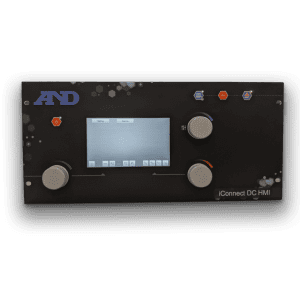
A&D Technology’s suite of integrated hardware and software solutions is purpose-built for the demanding requirements of automotive powertrain testing. Their customized systems streamline every phase of the testing process—from data acquisition and automation to simulation, analysis, and lab management—making them an ideal partner for engineering teams seeking efficiency and precision. Solutions like iTest for test automation and LabWorX for lab asset management empower engineers to control complex setups with ease. For simulation and control, Helios HILS and ADX provide real-time, high-fidelity environments for powertrain validation, while Orion and Phoenix support advanced calibration and combustion analysis. A&D’s comprehensive services—including consulting, custom software development, equipment procurement, commissioning, and on-site support through Resident Engineers—ensure seamless integration into existing workflows. Whether it’s optimizing test automation or enhancing system reliability, A&D Technology delivers unmatched value for modern powertrain development.
FAQs About Automotive Powertrain Testing
Q1: What is automotive powertrain testing?
A1: It’s the evaluation of engine, transmission, and drivetrain components to ensure performance, reliability, and compliance.
Q2: How is electric powertrain testing different?
A2: It involves testing electric motors, battery packs, and controllers, focusing more on thermal performance and efficiency.
Q3: What tools are essential for test engineers?
A3: Key tools include torque sensors, dynamometers, DAQs, CAN analyzers, and thermal imaging systems.
Q4: How long does durability testing usually last?
A4: Between 500 to 2,000 hours depending on the component and vehicle lifecycle requirements.
Q5: Can simulation replace physical testing?
A5: Not entirely—simulation complements but cannot fully replace real-world data collection.
Q6: What are the main trends in this space?
A6: AI integration, virtual testing, and electrified powertrain validation are leading trends.
Conclusion: Building the Powertrains of Tomorrow
Automotive powertrain testing is more than a checkpoint—it’s a crucible for innovation. As we move toward electrification, sustainability, and software-defined vehicles, test engineers will be at the heart of progress. Staying current with tools, regulations, and testing strategies is not just a career booster—it’s a responsibility.
Read the flipbook
Download the Introduction to Automotive Powertrain Testing eBook