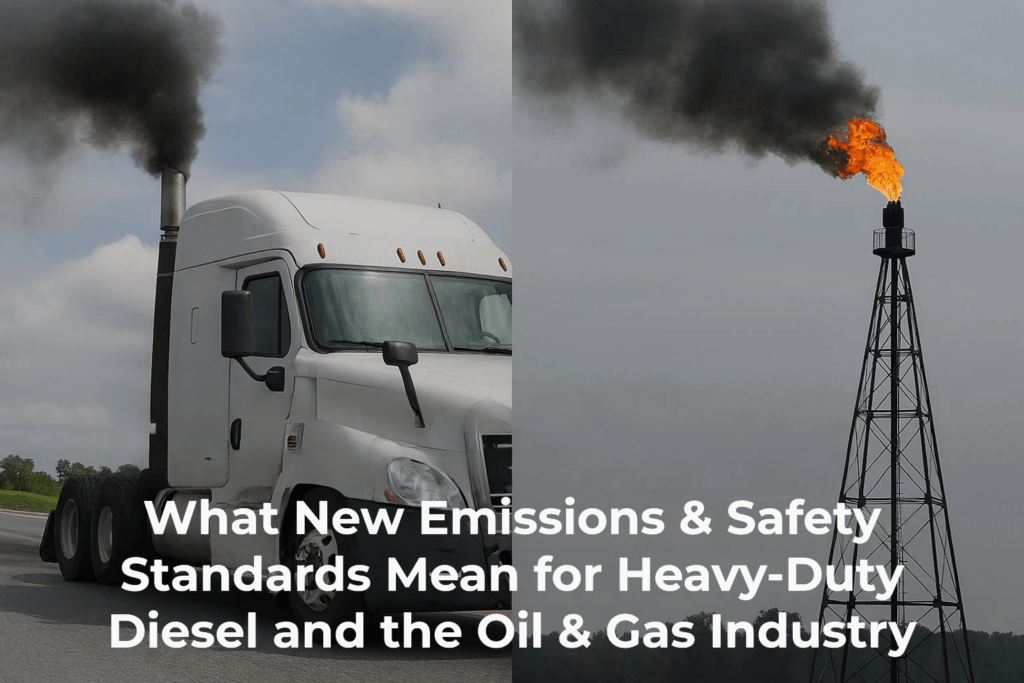

Preparing for 2026: What New Emissions & Safety Standards Mean for Heavy‑Duty Diesel and the Oil & Gas Industry
The heavy‑duty diesel and oil & gas sectors are heading into one of the most significant regulatory shifts in more than a decade. Between the proposed EPA Tier 5 standards and global methane‑reduction initiatives coming into effect in 2026, engineering teams will face rising pressure to validate cleaner, safer, and more efficient technologies—faster than ever before.
As R&D expectations grow, so does the need for testing tools that are flexible, automated, and built for regulatory change. Here’s what engineers need to know.
Who Sets These Standards—and Why They Matter
Regulatory bodies worldwide are tightening requirements to reduce greenhouse gases, improve worker and environmental safety, and align heavy‑duty sectors with broader climate commitments. Key organizations influencing 2026 standards include:
-
U.S. Environmental Protection Agency (EPA)
Setting proposed Tier 5 off‑road diesel standards and new methane reduction frameworks. -
California Air Resources Board (CARB)
Often more aggressive than federal legislation, shaping national policy direction. -
Global Methane Pledge participants
Over 150 countries working toward rapid methane reductions, especially in oil & gas operations.
Unlike passenger‑car regulations—designed around high‑volume manufacturing and standardized architectures—heavy‑duty and energy‑sector applications must account for:
- Extremely diverse duty cycles
- Harsh environmental conditions
- Wide variability in operational loads
- Long service life demands
- High safety‑critical risk profiles
This complexity significantly increases the need for rigorous, repeatable, automated testing.
How Heavy‑Duty & Oil & Gas Regulations Differ from Automotive
While automotive emissions standards focus heavily on tailpipe limits and aftertreatment durability, heavy‑duty and oil & gas applications face additional layers of scrutiny.
Key differences include:
- Engine classifications by horsepower and application, not vehicle class
- Continuous operation requirements, including 24/7 run cycles
- Strict methane, VOC, and hazardous air pollutant (HAP) regulations
- Explosion‑risk mitigation and safety‑critical certifications for oil & gas
- Higher variability in test conditions, demanding flexible automation strategies
In short: testing teams need systems capable of handling complexity, safety management, and frequent regulatory updates.
What’s Changing in 2026
Although the final EPA Tier 5 rule is still developing, most proposals and global initiatives align around several themes:
Expected 2026 changes:
- More aggressive particulate and NOx reductions for heavy‑duty diesel engines
- Expanded methane measurement and reporting requirements for oil & gas operations
- Tighter off‑cycle and real‑world emissions testing expectations
- Emerging safety standards for equipment operating near trapped combustibles
- Greater emphasis on data traceability, uptime, and audit readiness
Whether you’re designing new powertrains, upgrading test stands, or modernizing lab workflows, preparing for these shifts now is essential.
Ensuring Compliance During R&D and Production
Engineering teams can position themselves for success with three core principles:
1. Automate early and often
Regulatory testing demands consistency. Automation platforms such as iTest help engineers:
- Control and automate dynamometers, analyzers, and safety system tests from a single interface
- Build repeatable test sequences for emissions, durability, and calibration work
- Drag‑and‑drop complex logic—without custom coding
- Maintain traceable, audit‑ready test records
2. Design flexible, scalable test hardware
Test cells must adapt quickly as standards evolve. A&D Technology supports this with:
- Emissions measurement hardware
- High‑precision I/O and data acquisition systems
- Custom engine, motor, and powertrain test stands that can be integrated with most 3rd party equipment.
Our engineers can configure systems for diesel, gaseous fuels, hybrid powertrains, or multi‑fuel testing.
3. Centralize lab data, assets, workflows, and calibration management
Regulatory compliance requires complete control over data integrity and device traceability. LabWorX provides:
- Version‑controlled test procedures
- Automated asset scheduling and calibration tracking
- Centralized data storage and analytics across your lab
- Full visibility from test planning through report generation
Future‑Proof Your Testing Strategy with A&D Technology
As 2026 standards reshape the heavy‑duty and oil & gas landscape, A&D Technology provides the tools and expertise to help engineering teams stay ahead of the curve.
Our portfolio includes:
- iTest: Automation and real‑time control for engine, motor, and emissions testing
- LabWorX: Lab‑wide management for workflows, data, assets, and compliance
- ADX, Orion, Phoenix, Selene: High‑speed data acquisition, combustion analysis, automated calibration, and rapid prototyping solutions
- Helios HILS: Hardware‑in‑the‑Loop simulation for complex powertrain, battery, thermal, or component control systems
- Complete project services including engineering studies, consulting, installation, commissioning, training, and on‑site resident engineers
Whether you’re modernizing a single test stand or transforming your entire lab, we help you meet the needs of today—and the requirements of 2026.