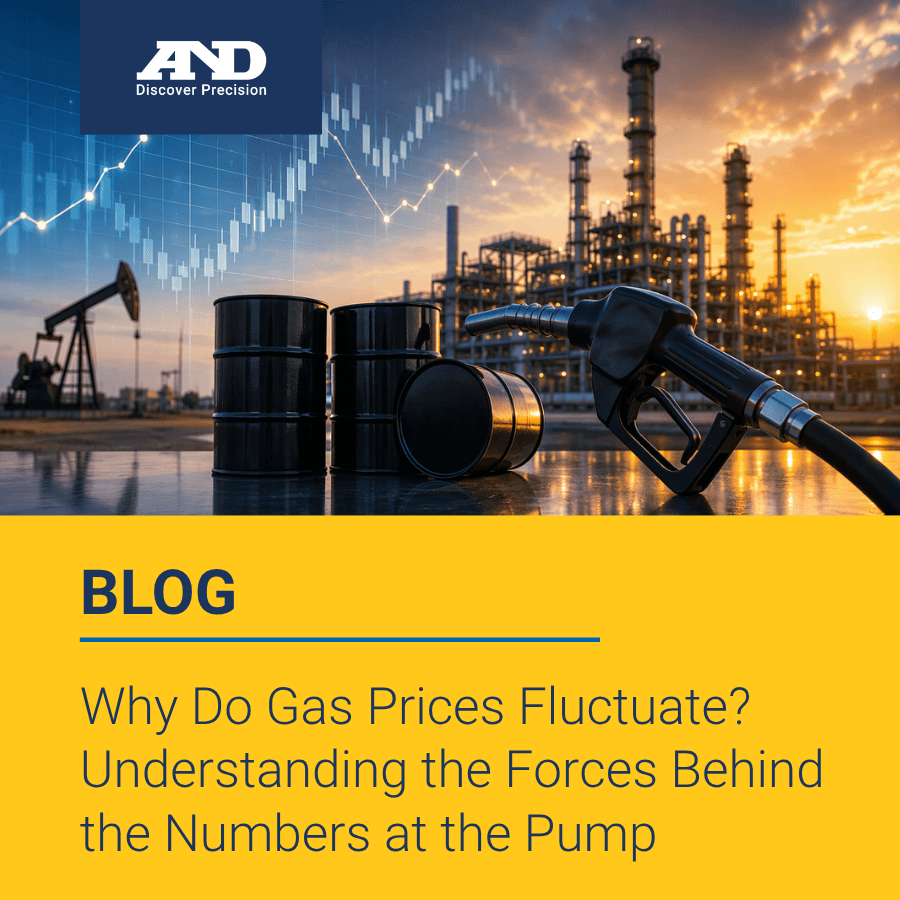

Why Do Gas Prices Fluctuate? Understanding the Forces Behind the Numbers at the Pump
If you’ve ever driven past a gas station and noticed prices changing from one week to the next, you’re not alone. Fuel prices are among the most visible indicators of global economic activity, and their fluctuations can affect everything from family road trips to commercial transportation costs. But what exactly causes gas prices to rise and fall? And how does this connect to the testing and development activities taking place throughout the oil and gas industry?
Let’s take a closer look.
The Economics Behind Gas Prices
At its core, gasoline pricing is driven by the same market principles that influence most commodities: supply and demand.
When demand for fuel increases, such as during summer travel months or periods of strong economic growth, prices often rise. Conversely, when demand weakens, prices tend to fall.
However, gasoline is unique because its supply chain is incredibly complex, involving:
- Crude oil production
- Transportation and storage
- Refining operations
- Distribution networks
- Retail fuel stations
A disruption at any point in this chain can influence prices.
According to the U.S. Energy Information Administration (EIA), crude oil typically represents the largest component of the retail price of gasoline. When global oil prices increase, consumers often see the impact at the pump shortly afterward.
Political and Geopolitical Factors
Energy markets are heavily influenced by world events.
Some common political factors that affect fuel prices include:
OPEC+ Production Decisions
Organizations such as OPEC+ can increase or decrease oil production targets. When production is reduced, global oil supplies tighten, often leading to higher prices.
International Conflicts
Political instability in major oil-producing regions can create uncertainty about future supplies. Markets often react quickly to perceived risks, sometimes driving prices higher even before actual supply disruptions occur.
Trade Policies and Sanctions
Tariffs, sanctions, and other trade restrictions can impact the movement of crude oil and refined fuels worldwide. These policy decisions can alter supply dynamics and influence pricing.
Government Regulations
Environmental regulations, fuel standards, and emissions requirements can affect refining costs, which may ultimately be reflected in retail fuel prices.
Refining Capacity Matters
Many consumers assume that oil prices alone determine gasoline prices, but refining capacity plays a significant role.
Crude oil must be processed into usable fuels before it reaches consumers. Scheduled maintenance, unexpected outages, severe weather events, or natural disasters affecting refineries can reduce fuel production and tighten supplies.
For example, disruptions in Gulf Coast refining operations can have ripple effects across fuel markets throughout North America.
Seasonal Trends and Consumer Behavior
Gasoline prices often follow predictable seasonal patterns.
During spring and summer, demand typically increases as more people travel. Refineries may also switch to seasonal fuel blends required for environmental compliance, which can cost more to produce.
In winter months, gasoline demand often softens, although demand for other petroleum products may increase.
Understanding these seasonal cycles helps explain why prices can change even when underlying crude oil markets remain relatively stable.
The Role of Testing and Development in the Oil & Gas Industry
While market forces determine fuel prices, the oil and gas industry relies on rigorous testing and development to improve efficiency, safety, reliability, and profitability.
Every stage of the energy value chain depends on testing:
- Engine and powertrain validation
- Fuel performance evaluation
- Emissions testing
- Equipment durability studies
- Turbomachinery development
- Compression system optimization
- Alternative fuel research
- Data acquisition and analysis
The more efficiently oil and gas companies can operate, the better positioned they are to maximize production, reduce costs, and adapt to changing market conditions.
Advanced testing technologies help organizations make informed engineering decisions while accelerating development timelines and reducing operational risk.
Why Integrated Testing Solutions Matter
Modern testing environments generate enormous amounts of data. Engineers need more than just instrumentation; they need integrated systems that connect hardware, software, automation, controls, analysis, lab management, and reporting into a streamlined workflow.
That’s where A&D Technology helps.
For more than three decades, A&D Technology has partnered with leading organizations across the automotive, energy, aerospace, heavy-duty diesel, marine, and oil & gas industries to deliver integrated testing solutions that improve productivity and accelerate innovation.
Our solutions support a wide range of test cell and laboratory applications, including:
- Combustion Analysis and High Speed data acquisition and control with Phoenix
- Test automation through iTest
- Real-time monitoring and reporting Lab Management tools with LabWorX
- Hardware-in-the-loop simulation using Helios HILS
- Custom engineering services, studies, consulting, and system integration
By connecting instrumentation, automation, controls, and enterprise data systems, A&D helps oil & gas R&D engineering teams spend less time managing complexity and more time focused on development and innovation.