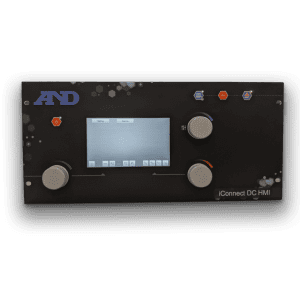
In the ever-evolving world of automotive engineering, precision and efficiency are paramount. Dynamometers, or “dynos,” are integral to vehicle testing, helping engineers measure performance, refine designs, and ensure quality. At A&D Technology, we provide state-of-the-art solutions, including our iTest systems, to enhance the capabilities of dynamometers and optimize the entire vehicle test cell.
What Are Dynamometers Used For in a Vehicle Test Cell?
Dynamometers serve as the cornerstone of vehicle testing, delivering insights into various performance parameters. Common applications include:
- Measuring Engine and Drivetrain Performance: Dynos measure horsepower, torque, and rotational speed, providing critical data for tuning and validation.
- Emissions Testing: By simulating road conditions, dynos help evaluate engine emissions under controlled scenarios.
- Durability Testing: Dynos replicate real-world stresses to evaluate component longevity.
- Calibration and Development: They assist in refining engine control systems for optimal efficiency and compliance with regulatory standards.
How Dynamometers Work
At their core, dynamometers are machines that measure force, torque, and power. They work by resisting the rotational motion of an engine, motor, or drivetrain and calculating the energy output. This resistance can be achieved through various mechanisms, including mechanical brakes, electrical systems, or fluid dynamics.
Types of Dynamometers and Their Best Applications
There are several types of dynamometers, each suited to specific testing needs:
- Engine Dynos: Test engines independently from the vehicle.
- Best For: Testing engines independently from the vehicle to isolate performance metrics.
- Typical Use Cases: Engine development, performance tuning, and emissions testing.
- Advantages: Precise control over engine inputs, such as fuel flow and throttle, allows for detailed performance analysis without interference from other vehicle components.
- Chassis Dynos: Measure performance by running a complete vehicle on rollers.
- Best For: Testing an entire vehicle’s performance, including the drivetrain, under simulated road conditions.
- Typical Use Cases: Powertrain calibration, emissions testing, and performance validation for production vehicles.
- Advantages: Captures the full interaction of engine, transmission, and other drivetrain components, making it ideal for real-world scenario simulations.
- Inertia Dynos: Simulate real-world driving by relying on a flywheel to replicate mass.
- Best For: Simulating real-world driving conditions for vehicles or components where weight/mass is a key variable.
- Typical Use Cases: Performance testing for racing applications or vehicles with high-speed requirements.
- Advantages: Simple and cost-effective, these dynos are well-suited for straightforward testing scenarios.
- Hydraulic/Water Brake Dynos: Use fluid resistance to measure torque and power.
- Best For: Testing high-powered engines or applications where durability and rugged performance matter.
- Typical Use Cases: Marine engines, industrial machinery, and heavy-duty vehicle engines.
- Advantages: Can handle large power outputs and dissipate heat effectively, making them ideal for long-duration or high-load testing.
- Eddy Current Dynos: Create resistance using electromagnetic fields.
- Best For: Applications requiring precise control over resistance and quick response to changes.
- Typical Use Cases: Automotive development, especially for electric or hybrid vehicles, and detailed emissions testing.
- Advantages: High accuracy, rapid adjustments, and minimal mechanical wear.
- AC/DC Dynos: Use electric motors to apply or absorb power, enabling bi-directional testing.
- Best For: Bi-directional testing where power needs to be absorbed or applied, such as hybrid systems or regenerative braking tests.
- Typical Use Cases: Testing electric and hybrid drivetrains, motor efficiency, and energy recovery systems.
- Advantages: High flexibility and control, ideal for advanced testing scenarios in modern vehicles.
By selecting the right type of dynamometer for the situation, engineers can ensure they gather the most relevant and accurate data, optimizing performance, compliance, and durability testing. A&D Technology’s iTest software supports all these types of dynos, enabling seamless integration, automation, and control across the entire test cell.
Enhancing Dynamometer Functionality with A&D Technology’s iTest Software
Dynamometers are powerful tools on their own, but their true potential is realized when paired with advanced control and automation systems. A&D Technology’s iTest software integrates seamlessly with dynos and other vehicle test equipment to create a streamlined, automated testing environment.
Key Benefits of iTest Software
- Comprehensive Control: iTest manages dynamometer operations, test sequences, and data acquisition in real time.
- Customization and Flexibility: Adapt test parameters to match specific requirements with an intuitive interface.
- Automation and Efficiency: Automate repetitive tasks, ensuring consistent results while saving time.
- Data Integration: Collect and analyze data from multiple sources, enabling deeper insights and informed decision-making.
Why Choose A&D Technology?
At A&D Technology, we understand the challenges of vehicle testing. Our solutions are designed to simplify complex processes, improve accuracy, and accelerate product development. With our iTest software, you can harness the full capabilities of dynamometers and other test cell equipment, paving the way for innovation and excellence.
To learn more about how A&D Technology can transform your testing process, contact us today!